Rooting for the Chicago Cubs to win the 2016 World Series
brings everyone together
Something good finally happened.

That is the explanation for the unadulterated joy that is sweeping Cubs fans across the country.

Sure, the Cubbies’ 2016 World Series win was about ending the fabled 108-year drought. It ended the "curse" that some had come to believe haunted our team. But the reason that the screams of jubilation were so ear-piercing that they could be heard more than a mile away from Wrigley Field on Wednesday night had to do with so much more than baseball.

In a region of the country that feels forgotten, where the Caterpillar and Case-IH plants that once supported entire families have been shuttered for decades, where the formerly bustling shopping malls stand half empty, the Cubs win was finally something that had gone right. In a city grappling with racial tension and gun violence, baseball could bring people of all ages, backgrounds and colors together. In a time and a place where it felt like there was little left to believe in, belief in the long-suffering home team had finally paid off.

"I don't get the fans," a new friend of mine said during one World Series game last week. "I mean, I get that it's nice to win, and sad to lose, but I don't understand the crying. How can they be so invested in it?"

Of course, this, from a Yankees fan. A Bucks County man for whom life has gone pretty well, overall. A casual fan of a team whose name is practically synonymous with success, having won 27 World Series championships since 1923.

Before this year, the Cubs had won two. The last one - as anyone who hasn’t retreated to a cave to escape the 2016 presidential election season knows - was in 1908. Dexter Fowler, who led off Game 1 this year, became the first black Chicago Cub to appear in the World Series; the last Cubs team to make it even that far played before Jackie Robinson broke the color barrier.

So, it's easy to not understand the jubilation of Cubs fans, when your team usually wins and your kids go to new schools with band practices and pretzel sales and pep rallies. When life isn't a series of compromises, even on necessities. Do I pay the electric bill or the car insurance? Buy the name brand canned goods or the generic?

When the prospects for your children's future seem bleaker than yours were, when you feel like your parents had it easier than you do, this one bright shining achievement is loaded with meaning. "It's gonna happen," was more than the Cubs rallying cry. It was the collective plea of families hanging desperately onto the ledge of hope. It reflects 108 optimistic winters of believing, in their team, yes, but also in themselves, in their families, in their futures, even in the face of generations of hardship. Believing in the idea that summer - and the proverbial “boys” thereof - would come again and bring a long-awaited victory.

It’s easy to pack in the fans when you win a lot. It’s harder when the likely end of the game is an “L” flag flying above Wrigley. But Cubs fans never gave up. And many held onto that thread of connection to their team no matter how far away their lives swept them from the city by the lake. My brother, Keith Larson, lives in Portland, Ore. now. He still flies to Chicago for the Cubs opener every year that he can afford it.

For some, of course, the win comes too late. My great-aunt Marilyn Wilson wanted to see a Cubs World Series win before she died. She held on until the very end, when she died in June 2015 at age 93.

It’s a pervasive cliche that we Midwesterners are of hardy stock, hard-working, friendly, and dependable. We are devoted, whether to friends and family, jobs, or baseball teams.

The funny part is that we really are those things. We hang on.

In my hometown of Moline, Illinois, you'll find generations of descendants of the Larsons and Johnsons and Swensons and Johannsons who came from Sweden in the late 1800s to work for Johnny Deere, who had moved his plow business to the town on the banks of the Mississippi River in 1848. They took the train from Chicago, stepping off, legend tells us, when the train conductor uttered the only English words they knew: “John Deere town.”

They typically arrived with few possessions but a determination to work hard and prosper. They mostly did, building the factories and the machines that built America and drove the Industrial Revolution. After the Civil War, freed slaves and other economic migrants from the defeated South came north to join them. And during the long summers, they all watched baseball. The steady, mostly predictable rhythm of the game matched that of their lives.

Over the decades, their descendants sported baseball caps with the iconic C, and they named their kids Addison and Clark. My contemporaries in high school hung posters of Ryne Sandberg on their bedroom walls. My family dog’s name was Dusty Baker, and even though that had been a nod to my father’s anomalous Dodger following, when Baker became the Cubs manager in 2003, it seemed to me as though it had been predestined.

What also seemed predestined to some was that somehow, some way, no matter the score or how favorable the predictions, the Cubs would manage to stumble yet again. On Wednesday night, when they blew a 5 to 1 lead, one of my high school friends posted on Facebook, “This is so Cubs….”

Because it was. When the arm-weary Aroldis Chapman, the half-season rental whom the Cubs acquired during the summer for the sole purpose of pitching the late innings of a World Series, allowed a home run to tie the score in the eighth inning, it seemed as though the ghosts that had haunted Cubs teams of the past had taken roost in the rafters in Cleveland: the black cat at Shea Stadium in 1969, Leon Durham fumbling the ground ball behind Rick Sutcliffe in 1984, and even the tragic Steve Bartman, who lives in body but whose tortured spirit has never allowed him to return to Cubs fandom. It seemed then that the “Cuban Missile,” as Chapman was known when he arrived in baseball, had detonated in the midst of them all. The blast radius would have consumed the entire Midwest.

Then the skies opened. “Raining….Tears of all the Cubs fans in heaven,” wrote my would-be aunt on Facebook. Her donut shop, Donut Delite, had opened at 4:30 a.m. on game days to sell elongated donuts with white icing, blue sprinkles and the Cubs “C” piped on in red in the middle.

But we kept watching, kept cheering, kept rubbing the talismans, even as the game went into extra innings and the rain continued to pour. My brother, my cousin Olivia, my uncles Andy and Larry and I kept a group text going all night. “I think I may have a heart attack,” Olivia texted as the 10th inning opened.

So, when Mike Montgomery, a supporting character who never imagined he would be called upon to execute such a momentous task, recorded his first career save by securing the final out in the bottom of the 10th, and we realized that we had won? The ground shook from millions of Cubs fans across the country leaping off of bar stools and couches and jumping up and down and hugging. And, yeah, crying.

The reality of finally winning something, finally having generations of hope and faith validated, took a while to sink in.

“It is still unreal,” my uncle Andy texted us again from western Illinois on Friday morning. “What a miracle. [Cubs Owner Thomas] Ricketts, Theo [Epstein, Cubs general manager], 5 years….And in our lifetime! We are all blessed. Enjoy, baby!”

A good thing happened. In our lifetime. And now, “Wait `til next year” isn’t an expression of stubborn hope in the face of a crushing legacy. Now, “Wait `til next year” means that the summer of 2017 will bring the chance for the Chicago Cubs to pursue back-to-back World Series championships. Just like they did 108 years ago. Maybe good things happening can become the new tradition.

That’s a belief worth hanging on to.

With my garden planning steaming ahead, I had to start choosing the actual plants I am going to try to grow this year. The Baker Creek catalog of heirloom seeds has been my constant companion for the past few weeks, and I have nearly read it cover to cover. You can order it from them, but last year, the catalog took about four weeks to arrive, and I was way too impatient for that this year, so I picked it up at Barnes & Noble.


Learning the stories behind the plant seeds that the Missouri-based company has gathered from around the world is fascinating to me, and the photography in the catalog is absolutely gorgeous.


After a few weeks of perusing the extensive seed catalog, and researching plant spacing and square foot gardening approaches, I was ready to order.

Here is what will be growing in my 2016 garden, Mother Nature willing:

Beans:
  • Blue Lake Bush
  • Calima Bush
  • Purple Dove Bush 
  • Red Swan Bush
  • Dragon Tongue Bush
  • Barnside Sweet Runner Bean
  • Scarlet Runner Bean
  • Purple Podded Pole Bean

Carrots:
  • Atomic Red
  • Carnival Blend
  • Short n Sweet

Cucumbers:
  • Marketmore 76
  • National Pickling
  • Tendergreen Burpless

Eggplant:
  • Antigua
  • Casper
  • Diamond

Onion: Flavor King

Peppers:
  • Chinese Five Color
  • Jalapeno
  • Sweet bells, including California Wonder, Diamond, Golden California Wonder, Orange Sun and Purple Beauty

Pumpkins:
  • Baby Boo
  • Jack-Be-Little

Snow Pea: Oregon Sugar Pod II

Squash:
  • Black Beauty zucchini
  • Burpee's Fordhook zucchini
  • Early Prolific Straightneck squash
  • Summer Crookneck squash

Tomatoes: These are my real loves and where I plan to spend most of my space and time. I've allotted 34 in-ground spaces for tomatoes, and likely will stick a couple in grow bags at home, as well. So far, only two on the list are hybrids - Sun Gold or Sun Sugar and Super Sweet 100s. The rest are heirlooms, and even their names are intriguing. Here is what I chose:

Cherry tomatoes:
  • Black Cherry
  • Chocolate Cherry
  • Hartman's Yellow Gooseberry
  • Purple Bumblebee
  • Sunrise Bumblebee
  • Chocolate Pear
  • Yellow Pear
  • Ivory Egg

Slicers and saucers:
  • Arkansas Traveler
  • Aunt Ruby's German Green
  • Bonny Best
  • Kellogg's Breakfast
  • Green Zebra
  • Orange Strawberry
  • Black From Tula
  • Mr. Stripey
  • Amish Paste
  • Stupice
  • Cherokee Purple
  • Mortgage Lifter
  • Box Car Willie
  • Beefsteak
  • Black Brandywine
  • Red Brandywine
  • Yellow Brandywine

A couple (Cherokee Purple, Mr. Stripey) are seeds I saved from 2015 plants. A handful, I picked up at Ott's Exotic Plants in Schwenksville. The rest, I ordered from Baker Creek. When the order arrived, I was like a kid in a candy store.


Now, to get them all started in time...
The chill of winter is on the wane here in Pennsylvania, at least for now. Though we likely are in for another spell or two of cool to cold weather, the temps in the 60s and 70s have launched me into full-on garden planning mode.

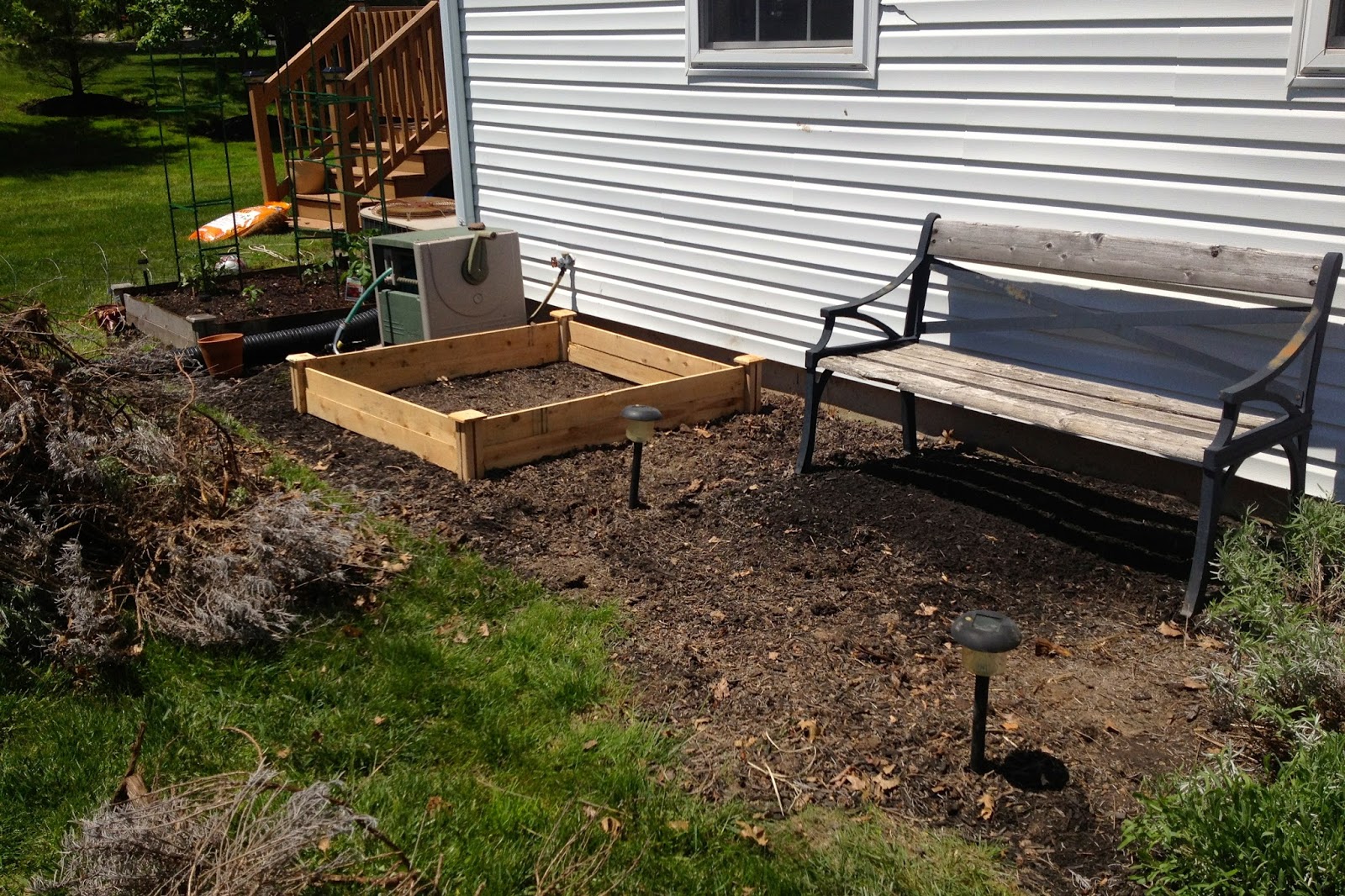
Each year that I have gardened here in my little slice of suburbia, my plans and ambitions have, well, grown. From containers,  to one 4x4 raised bed,


to two 4x4 raised beds (for which I tore out an old, dead lavender bush:


to the two beds and a conglomeration of grow bags and containers of all sizes in 2015.


This year, I'm getting serious.

The nearby town of Perkasie created a community garden space on an unused piece of land donated by Kenneth Kratz Real Estate. Would-be green thumbers can rent a 12x12 plot of land for $10 for the summer. That includes water, which is provided by the borough.

So, being a Gemini and all, I decided to go big. I rented two 12x12 plots for Gardenpolooza 2016. Now, 288 square feet of garden may be old hat to many gardeners, but for me, this is a pretty big leap.

In addition to greatly expanding the amount of land I'm going to garden, I also am tackling another project - starting all (or most) of my plants from seed.

I started seedlings for the first time ever last year - and was a bit surprised when it actually worked. In the intervening months, many winter hours have been spent poring over seeds catalogs, such as the one from Baker Creek.

The list of favorites and must-trys is expanding by the day. What will end up on my final order? We will have to wait and see.

When my daughter was in kindergarten at Sellersville Elementary School, I had a flexible enough work schedule that I was able to spend an hour a week volunteering in her classroom to help the gaggle of squirming 5- and 6-year-olds with free writing.

The weeks got colder as we moved into another Northeast winter, and most of the kids' clothing evolved accordingly. Shorts lengthened into pants. Short sleeve shirts into long-sleeve shirts and sweatshirts. Sandals into sneakers and socks.

Except for one little boy.

"Can you tie my shoe?" he asked, sticking out a sneakered foot.

As I scooched up his pant leg to rearrange the snarled laces, I realized that he didn't have any socks on. It was December in Pennsylvania. Not a good month to go about without socks.

"Where are your socks?" I asked him, with a mock scolding tone of voice.

"I don't have any," he said matter-of-factly, and sat back down to continue painstakingly penciling block letters into his free writing journal.

Now - I have two kids myself, and I know that not everything that comes out of kids' mouths is true. That's not to say they're lies - kids just don't always have full knowledge or grasp of a situation. It was perfectly possible that this little boy had socks and just didn't feel like putting them on - and that his parents chose to let him take ownership of that decision and feel the consequences of not wearing socks in winter.

Somehow, though, I knew that wasn't the case. This little boy, who lived within a two- to three-mile radius of my comfortable suburban home, did not have socks to wear to school in winter.

That was 2012, and the situation for many of my children's schoolmates has not only not improved, it has grown markedly more desperate.


Since 2012, the number of children in the Pennridge School District who are eligible for the free or reduced-price lunch program has surged from 14.2 percent to 23.3 percent. That means that nearly 1 out of every 4 students in this Bucks County school district lives in a family struggling to get by on 130 percent to 185 percent of the federal poverty threshold. With the poverty threshold for 2015 set at $24,250 for a family of four, that means an annual family income of about $32,250 to $44,860.

At my children's elementary school alone, the number of eligible kids nearly tripled between 2000 and 2014, from 6.6 percent in 2000 to 18.5 percent in 2013.

So much for the economic recovery.

Given that backdrop, it was with real sadness that I saw our local food pantry posting on Facebook today:


The Pennridge FISH food pantry is completely out of soup, beans, spaghetti sauce, canned tomatoes, boxed and canned...
Posted by Pennridge Fish on Friday, September 11, 2015


We will be heading to the grocery store to pick up some staples to donate to our local organization, Pennridge Fish, which concentrates its efforts exclusively on our local school district. We will drop them off on the way to my daughter's soccer game, feeling ever so thankful that such an organization exists.

If you want to know how families in your own school district are faring, check out Kids Count Data Center. And for a real eyeopener, this article from The Atlantic, on families who survive - barely - on about $2 per day is illuminating.
Busy, busy lately. Summer is flying by. Just a quick post today to show off the flourishing tomato plants. Yum.

First up, the Sweet 100s. This hybrid has grown like crazy - it is over 6 feet tall - and is now producing like crazy. Tomatoes are sweet, with just a touch of acidity, and the perfect size for snacking.


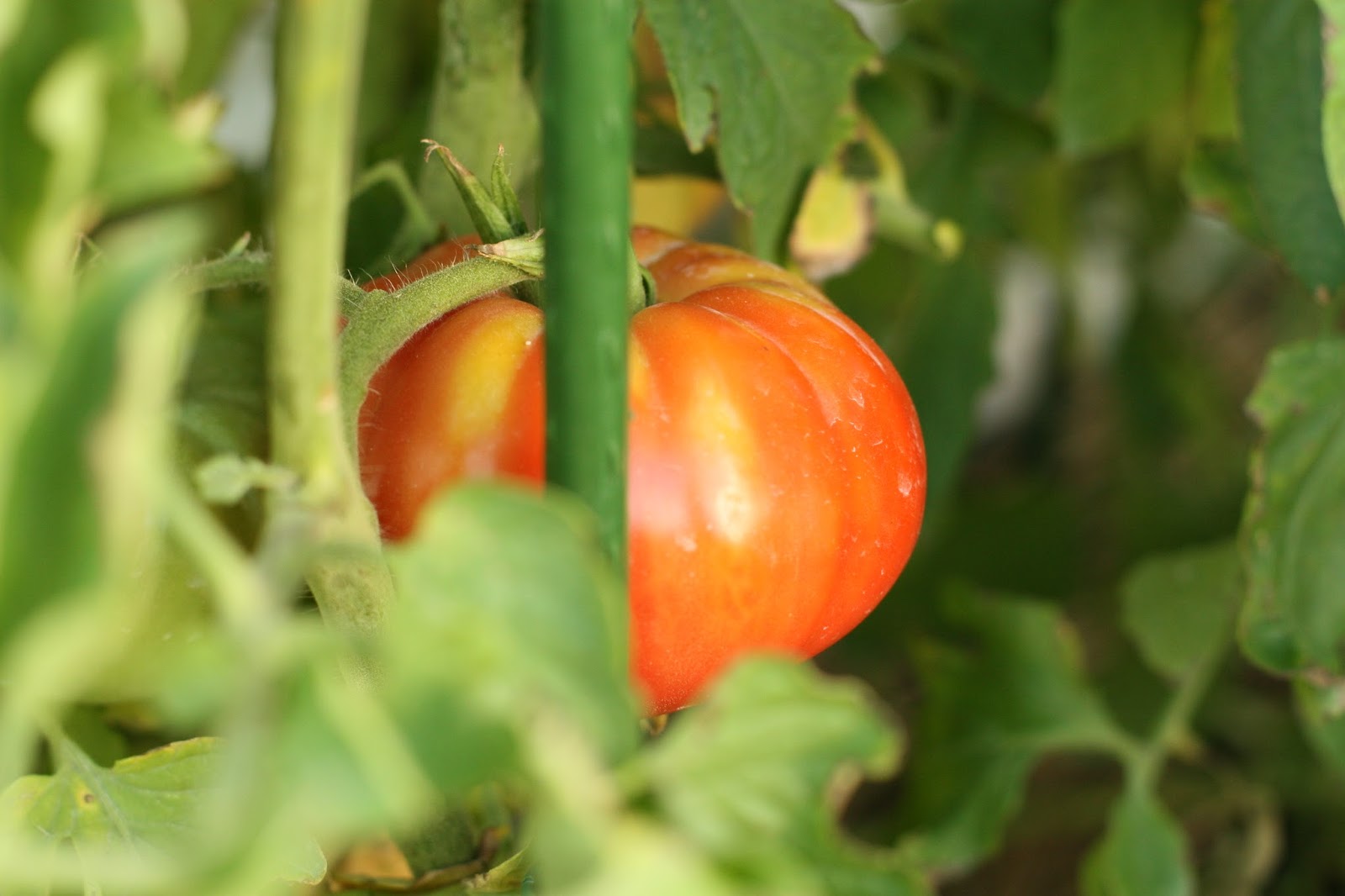
This heirloom tomato, Mr. Stripey, similarly is growing like mad. It is also more than 6 feet tall, and also is producing like mad. It has 14 tomatoes on it, and they each look to be at least half to three-quarters of a pound each.


Both of these indeterminate tomato plants are in the ground, in the second of my two 4-foot by 4-foot raised garden beds. They are far and away the tallest and most prolific growers in my garden so far this year.
One of the most enjoyable spin-offs of the local food movement has been the birth - or rebirth - of farmers' markets all across the country. In 2014, 8,268 farmers' markets were operating across the United States, up an astronomical 180 percent over the 4,593 markets in existence in 2006, according to a 2015 study from the U.S. Department of Agriculture.

Bucks County is home to more than 60 farms, pick-your-own fields, vineyards, orchards and farmstands, according to the county PennState Extension office. Not included amongst that tally (for whatever reason) is a farmer's market right in the heart of Bucks County.

The Perkasie Farmers' Market opened for the season on June 20, 2015 and runs every Saturday through Oct. 17. It is relatively small, compared to some other markets, but the produce selection and quality can't be beat. 


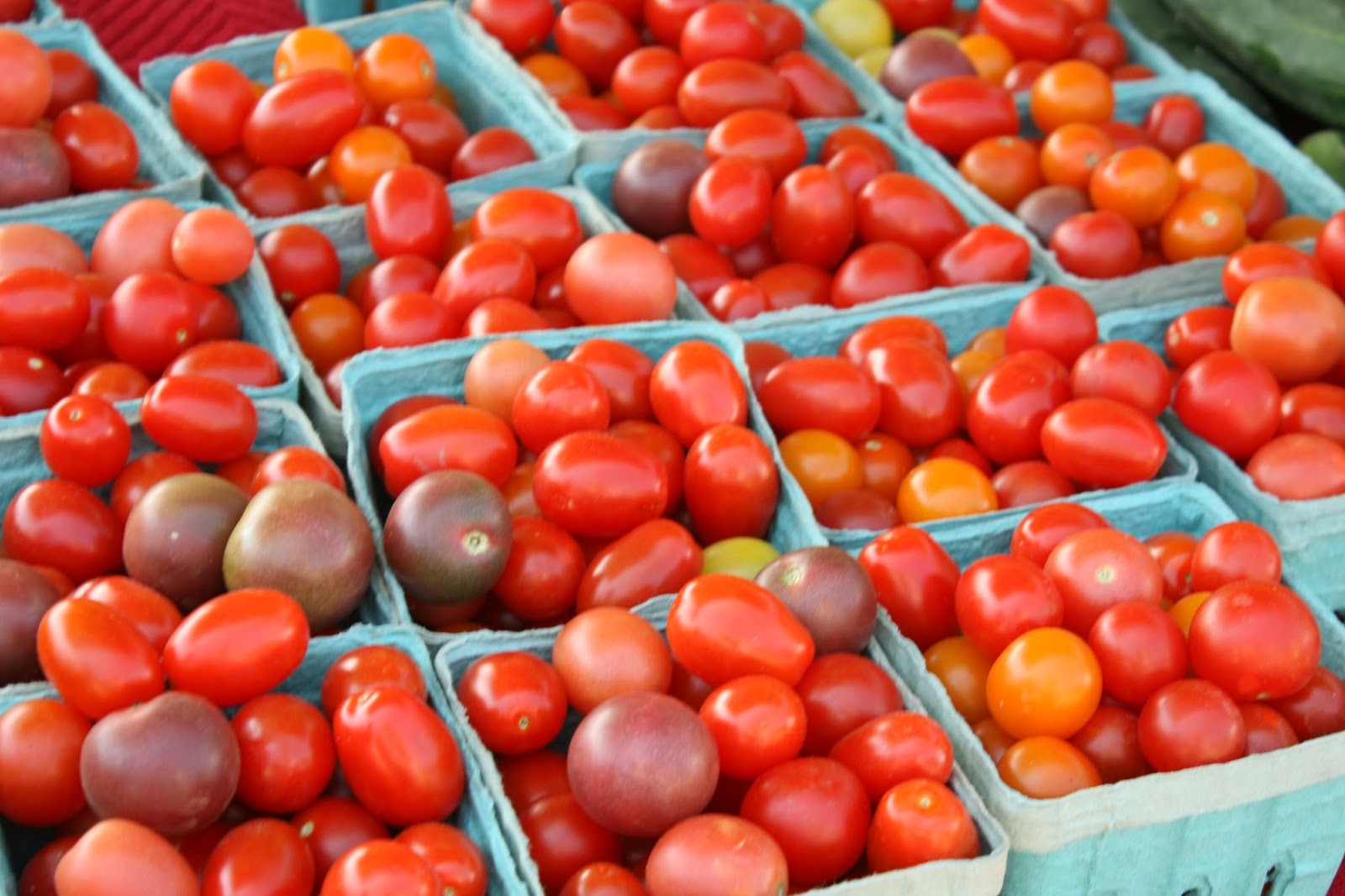
My obsession this year is tomatoes - heirloom tomatoes, to be exact, and there is no shortage of those wonders at the Perkasie market.


Besides produce, other vendors sell handmade arts and crafts - including some wonderfully fragrant soaps and bath bombs.


Vendors vary week to week, but have included:

  • 14 Carrot Farm - Quakertown, PA
  • Brumbaugh's Farm - Telford, PA
  • Freeland Market - Pottstown, PA
  • Hershberger Heritage Farm - Sellersville, PA
  • Living Hope Farm, Harleysville, PA
  • Small Batch Kitchen, Harleysville, PA
  • Stone & Key Cellars - Montgomeryville, PA
  • World O'Honey - Silverdale, PA

With the addition of live music and family-friendly activities such as chalk drawing or painting with vegetables, the Perkasie Farmers' Market is a fun, laid-back weekend destination. It's one more way people are discovering - or rediscovering - warm and welcoming small towns like Perkasie, and one more way that community leaders are working to make those towns' downtown areas vibrant, attractive places to live, work, and visit.

To see what's coming up at the market each week, check out their Facebook page.

If you go:

What: Perkasie Farmer's Market
Where: Corner of 7th Street and Market, Perkasie, PA
When: 9 a.m. to noon
Why: Fresh food and supporting local farmers and crafts people
The scourge of the gardener is pests. And diseases. And critters that eat things you are trying to grow.  And too much rain. And not enough rain. Okay, so gardeners have several scourges.

If you are growing any of the cucurbit family of veggies, though, pests are high up on that list. So it was that I got up close and personal with the squash bug this summer. Or, to be more accurate, the squash bug's eggs.

While working in the garden one morning, my daughter and I noticed a grouping of light brownish spots on the underside of a zucchini plant leaf. A quick check of the Google revealed them to be the eggs of the squash bug.


The squash bug likes to lay its eggs in clusters on the underside of a squash leaf.


The eggs are often clustered near one of the leaf's main veins.


Squash bugs can decimate a garden, and quickly. I knew they had to go.

I'm not a huge fan of chemical insecticides and have tried (and so far have succeeded) to avoid using them in my garden. So rather than try to poison the bugs, I wanted to find a better way to put an end to their next generation.

The answer was as near as my garage: duct tape.

Yes, you can use duct tape to remove squash bug eggs. It is easy and effective, does no damage to the environment or your food supply, and is an immediate solution.

Step 1: Discover eggs. Curse the gardening gods. Then gird your loins for battle.

Step 2: Locate duct tape. Probably in the garage. This step may actually take you the longest amount of time...

Step 3: Cut off a four- to five-inch length of duct tape.

Step 4: Hold the tape so that it is draped over a finger or two (index finger tends to give best control).

Step 5: Gently press duct-tape-covered finger against clutch of eggs and then pull back. Check to see that the eggs all stuck to the tape. If you missed a couple, just touch them again.


Step 6: Marvel at yet another use for duct tape. In the garden. Who knew?

Step 7: Fold the piece of tape securely in half and, for extra measure, squish the two sides together to smush the eggs flat in between. Throw the egg-ridden folded tape in the trash, and take out the trash. Ick.


Even if the tape removes a portion of the leaf along with the eggs (as it did here), that tiny damage still is better than allowing the squash bug eggs to hatch into a crowd of voracious insects ready to destroy your hard gardening work.

After we discovered the first clutch of eggs, checking the undersides of leaves of our yellow squash and zucchini plants became a daily part of our garden work. Every few days, we would find another cluster of eggs. We used the duct tape solution to our squash bug egg problem each time, and it worked like a charm.

I only ever found two actual adult squash bugs, and they were easy enough to grab and kill by smushing. Sorry, squash bugs. You have got to go.

What pests have you discovered in your garden this year? How have you handled them?
The recent cool, rainy, grey weather here in the Philly 'burbs has had me worried. Not just for my own sanity - honestly, after this past winter, we all NEED some sunshine, amirite? - but also for the health of my latest obsession: tomatoes. Well, my garden overall, really.

But my weekly garden tour and assessment perhaps should put some of my fears to rest. Everything seems to be gaining in size and production, and, so far at least, staying ahead of pests and diseases. Here is the nickel tour.

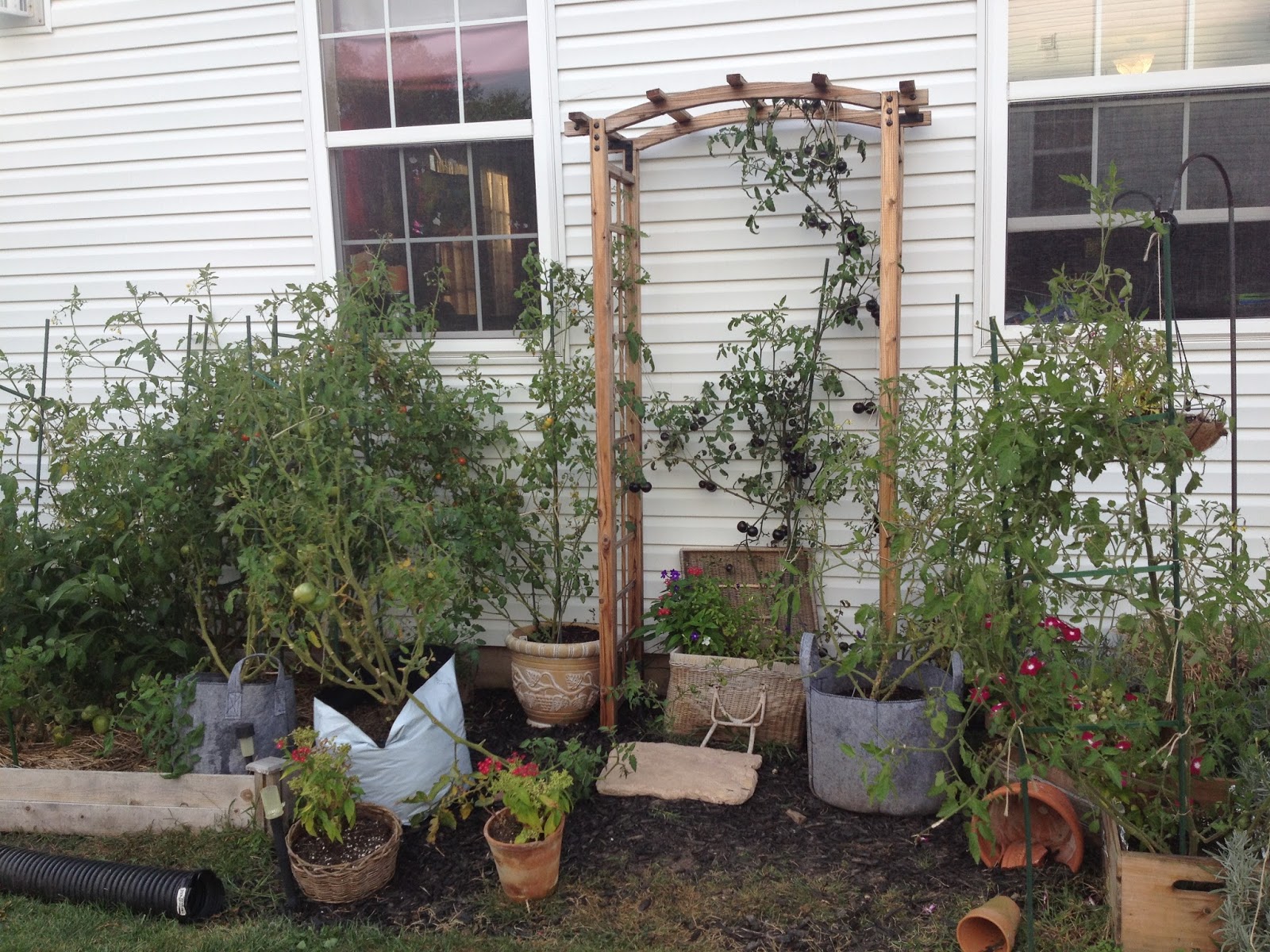
This is the newest area of our garden. I created it in May, by moving an old garden bench we had between the windows to the back by the deck and putting the arbor in its place, along with other various containers - including the picnic basket, which I got for about $8 at our local thrift shop. At the far right, in the first crate, is a Black Cherry tomato.


This is an Early Girl. I don't think I'll plant this one again next year. It has not proven to be particularly early, nor particularly prolific.


This is an Indigo Rose tomato, which was bred at Oregon State University and released in 2012. I picked this up as a seedling from Ott's Exotic Plants in Schwenksville, Montgomery County, PA. Watching it develop has been a true pleasure, and the blue-black of the fruit is intriguing. (I'll post a close-up later) I'm looking forward to tasting it.


Next up is a Sun Sugar. This one, I actually purchased from Frederick's Flowers in Souderton, and it was already of substantial size when I bought it. The foliage is a little more yellowy - lime greenish than I'm used to on a tomato, so I don't know if that's because I'm doing something wrong, or if that's just how the plant looks. One of these little gems has ripened so far, and the taste is amazing. So incredibly sweet and fresh. I hope this one keeps producing.


Next, is a 4 x 4 raised bed that we installed last year. Below, you can see a Super Sweet 100s red cherry tomato (on the right) and to the left is a Mr. Stripey, an heirloom that ripens to a red with yellow stripes. I'm going to try saving seed from this one for use next year, or the year after.


At the front of the bed is a straightneck summer squash plant. If we're not careful, it might swallow the house. So far, it is producing well, and we are staying ahead of powdery mildew, a fungal disease with which we have had issues in past years. Keep your fingers crossed. And send squash recipes. Many, many squash recipes...


My husband's poor little jalapeno plant has been totally eclipsed by the squash, but it honestly doesn't seem to mind. Hidden under those leaves, it is still flowering and producing little baby peppers.


A better view of Mr. Stripey. You can just barely see the first few tomatoes in the middle.


The second 4 x 4 raised bed is by now a sprawling mound of vining plants. Left, zucchini. Right, toward the fence section, is a burpless cucumber that is producing faster than I can keep up. Bottom right corner is Blue Lake Bush Beans - which started as five "little" plants. I've never grown beans before, and I just noticed the first few have materialized, so I am beyond thrilled that they are (so far) growing. Bottom left corner, barely discernible under the zucchini leaves, is a cantaloupe plant. My daughter picked it out, but I have since learned that cantaloupe is somewhat difficult to grow, so I'm not surprised that it hasn't done much. Plus - with the Monster Zucchini for a neighbor, the poor thing probably gets little sun.


This is the first large-ish tomato to begin ripening. This is an Amish Paste, another heirloom variety that legend has it was collected from the Amish in Lancaster County, PA. It is supposed to be great for making tomato sauces, as it is very thick-walled with lots of flesh. I've never grown this one before, so we'll see how it turns out. The plant itself, I put in a pot that I now realize is too small for it - but I'm afraid to re-pot it into a larger grow bag, at this point.


Speaking of grow bags, below are two different kinds that I ordered after the tomato seeds that I started actually produced seedlings. (I've never started anythings - successfully - from seed before, so I was kind of surprised that it worked.) By the time the seedlings were established, I had already planted in every container I had and a few I had to buy. Grow bags were recommended to me by Craig LeHoullier, the author of Epic Tomatoes, which I admit I have read cover to cover. They have proven to be an economical alternative and the seedlings are flourishing. The two plastic grow bags are the kind Mr. LeHoullier said he uses, ordered from GrowOrganic.com; the two fabric ones are "Dirt Pots" I ordered on Amazon after checking literally every garden supply shop within miles. No one carried them locally. 

Unfortunately, the seedlings were desperate to be planted, and in the rush to get them in the soil, I forgot to mark which was which. I do know that the one in the back Dirt Pot is a Yellow Pear, an heirloom that produces small, pear-shaped sweet tomatoes. The other three are heirlooms too: a Black Krim (originally from Russia), Box Car Willie, and Cherokee Purple. I just don't know which is which, at this point.


I do have one more tomato, a Cherokee Purple that I bought as a seedling, but I forgot to take a picture of it. That will have to wait for the next update!

Are you growing anything this year? What is working and what isn't? I would love to hear your thoughts and stories.
Black raspberries are not blackberries. Blackberries are not black raspberries.

That's the first thing I have found myself explaining to well-intentioned people who have directed me to blackberries when what I asked for was black raspberries. It turns out there is a fair amount of confusion over the two. Once you've tasted real, honest-to-goodness black raspberries, though, you will never be confused about them again.


Fortunately, if you live near enough to Bucks County, Pennsylvania, there is an easy way to educate yourself and your taste buds. Penn-Vermont Fruit Farm, in Bedminster Township, offers pick-your-own black raspberries. They are in season now, and they are gorgeous.

Penn-Vermont is nestled along what is still today a country road, Bedminster Road, even though it also happens to be Rt. 113, an important connector road through the heart of Bucks County and its farm country. A drive to Penn-Vermont displays some of Bucks County's most beautiful scenic farm land, and is a relaxing way to spend any morning or afternoon.


The farm itself comprises nearly 60 acres and has been preserved for agricultural use through Bucks County's Agricultural Land Preservation Program, which has preserved more than 12,000 acres across the county since its founding in 1988. Owned by Ken and Judy Bupp since 1982, the farm is an amazing community resource. Taking kids to see a real farm is an education in and of itself, especially for kids who may live in urban or suburban environment disconnected from the places where fresh food is actually grown.

Nearly every time we've visited, the family that keeps the farm running is out in the fields, actually keeping the farm running. Note the farm equipment to the right of the photo below:


On this particular visit, my daughter and I were there with one thing in mind: black raspberries. Penn-Vermont had alerted followers on the farm's Facebook page that the berries, sometimes called "black caps" by growers, were ready. And since the season is relatively short, we didn't want to waste any time.

We weren't disappointed. After we checked in at the stand near the entrance to the farm, we picked up a carrier with six dry pint berry baskets and the helpful young lady directed us to the patch. "Head for the farthest rows - most people stop at the first rows, so the back rows have more."


We did as she suggested and headed for the rows farthest from the check-in stand. Within minutes, we were pulling gorgeously plump, shiny black raspberries off the canes and into our little baskets.

When perfectly ripe, black raspberries pull so easily off the core on the cane that they practically fall into your hand. Like most berries, they should be treated gently so as not to smush them.

When they do get smushed, the juice that leaks out leaves a gorgeous dark berry stain - just don't rub your hands on your clothes, especially not white clothes.

Though black raspberries can be grown across North America, most of the berries grown in the United States seem to come from Oregon - the Willamette Valley, specifically. That may be one explanation for why they can be so hard to find in other parts of the country.

The relative rarity can mean that black raspberries are a pricy choice in markets across the country. At the Penn-Vermont pick-your-own fields, however, cost was just $5 per dry pint.

Within about 30 minutes, we had filled two pint baskets to the brim with perfectly ripe, perfectly lovely black raspberries.


We headed for the stand to pay.


These berries are fated for two destinations: 1. a tiny batch of black raspberry preserves, and 2. our stomachs. They are so sweet and tart and tangy, I predict that we will eat most of them right away. Which is a good thing, because like most tender raspberries, they can go bad very quickly. Eating them right away, then, is really just doing them a kindness.

If you go:

What: Penn-Vermont Fruit Farm
Where: 831 Rolling Hills Rd., Bedminster, Bucks County, PA
Phone: 215-795-0230
Online: https://www.facebook.com/pages/Penn-Vermont-Fruit-Farm/107360655976304
Hours: Check the Facebook page or call before you go